


Professional grooming bills add up fast. At $40 to $100 per session, a medium-sized dog groomed every six weeks costs you over $400 a year before you’ve bought a single treat. Affordable pet grooming at home, which groomers call “owner maintenance grooming,” is how thousands of pet owners cut that number down dramatically without skimping on their pet’s coat, skin, or comfort. This guide covers exactly what tools you need, how to use them safely, what mistakes to avoid, and how much you’ll realistically save.
Table of Contents
- Key takeaways
- Affordable pet grooming at home starts with the right tools
- How to handle bathing, brushing, nails, and ears
- Managing common challenges and avoiding costly mistakes
- The real cost comparison: DIY vs. professional grooming
- My honest take on grooming your own pet
- Stock your home grooming kit with Mountmew
- FAQ
Key takeaways
| Point | Details |
|---|---|
| Start with a basic kit | A slicker brush, nail trimmer, styptic powder, and pet shampoo are all you need to begin. |
| Grooming pays for itself fast | A $150 to $300 tool investment breaks even in as little as two months of regular home grooming. |
| Build skills gradually | Match tools to your pet’s coat type first, then add clippers and scissors as your confidence grows. |
| Combine DIY with pro visits | Handle baths, brushing, and nails at home; reserve professional visits for complex tasks like dematting. |
| Routine beats perfection | Short, consistent grooming sessions prevent costly problems better than infrequent perfect ones. |
Affordable pet grooming at home starts with the right tools
You don’t need a salon’s worth of equipment to do a great job. According to PetPlace’s grooming guide, a safe at-home setup requires a brush matched to your pet’s coat, nail clippers or a grinder, styptic powder, pet-safe shampoo, towels, and ear-cleaning supplies. That’s it for the basics.
The key word there is “matched.” A slicker brush works beautifully on a golden retriever but tears through a short-coated beagle’s fur unnecessarily. A double-sided steel comb handles everything from finishing work to mat detection. Getting this wrong wastes money and frustrates both you and your pet.
Here’s a practical comparison to guide your first purchase:
| Tool | Basic option | Cost estimate | Advanced option | Cost estimate |
|---|---|---|---|---|
| Brush | Slicker brush | $8–$15 | Deshedding tool | $25–$50 |
| Comb | Stainless steel comb | $6–$12 | Rotating pin comb | $20–$35 |
| Nail care | Scissor-style trimmer | $10–$20 | Electric nail grinder | $25–$45 |
| Clippers | N/A (beginner skip) | — | Rechargeable clipper | $40–$80 |
| Shampoo | Basic pet shampoo | $8–$15 | Medicated or coat-specific | $18–$35 |
| Towels | Standard bath towels | $0 (repurpose) | Absorbent grooming towel set | $15–$30 |
lilidog’s grooming tool breakdown recommends beginners start with a slicker brush, stainless-steel comb, appropriately sized nail trimmer, styptic powder, and dog shampoo, then add clippers and scissors later once you’re comfortable. That advice alone saves most new home groomers from buying $200 worth of gear they won’t use for months.
Pro Tip: A pet detangling comb is one of the most underrated starter tools. It handles both mat prevention and finishing work, which means you get two functions for the price of one.
How to handle bathing, brushing, nails, and ears
These four tasks cover roughly 90% of what a professional groomer does at a standard appointment. Master them at home and you’ll only need a pro for haircuts and serious mat removal.
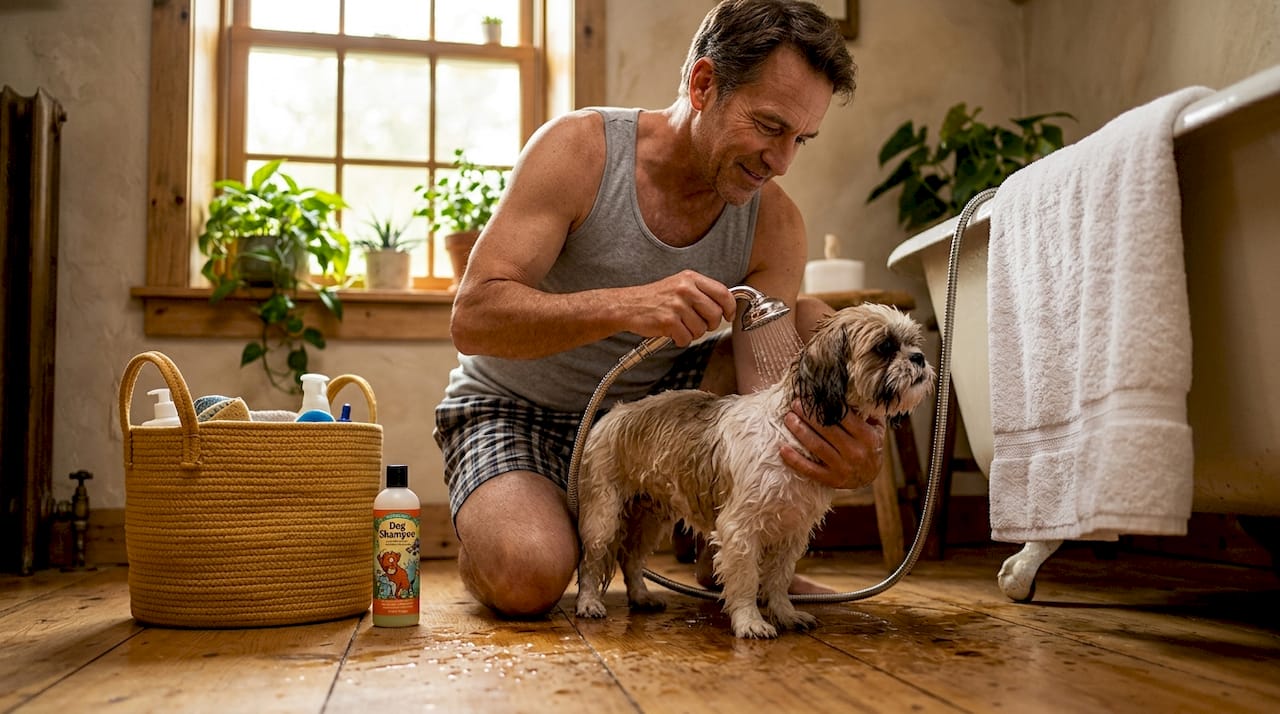
Bathing your pet safely
- Brush your pet thoroughly before the bath to remove loose fur and surface mats. Wet mats tighten and become much harder to remove.
- Use lukewarm water. Test it on your wrist the way you would for a baby.
- Apply pet-safe shampoo from neck to tail, avoiding eyes and ears.
- Massage the coat down to the skin, not just the surface.
- Rinse completely. Shampoo residue left in the coat causes itching and skin irritation.
- Towel dry firmly, then let your pet air dry or use a low-heat dryer on the coolest setting.
Most dogs need a bath every four to six weeks. Bathing too frequently strips natural oils and dries out skin. Cats typically groom themselves and rarely need baths unless they’ve gotten into something.
Brushing for coat health
Short-coated dogs need brushing once a week. Long-coated and double-coated breeds need it two to three times weekly to prevent matting. Always brush in the direction of hair growth, working in small sections. Pay extra attention to friction points: behind the ears, under the armpits, and around the collar.
Pro Tip: A spray comb that adds light moisture while you brush makes detangling significantly easier and reduces static, especially in dry climates.
Trimming nails without the drama
- Have styptic powder within arm’s reach before you start. Always.
- Hold the paw firmly but gently. Press the pad to extend the nail.
- Clip only the curved tip, well above the pink “quick” (the blood vessel inside the nail).
- If your pet has dark nails and you can’t see the quick, take off tiny amounts at a time.
- Reward immediately after each nail, not just at the end.
For anxious pets, using a grinder instead of clippers reduces the risk of cutting the quick and tends to cause less stress. The vibration takes some getting used to, but most dogs adapt within a few sessions.
Treat nail trims as short micro-sessions rather than one long ordeal. Two nails today, two tomorrow. Frequency prevents the nails from getting long enough to cause posture problems, and short sessions keep your pet calm.
Cleaning ears correctly
Ear cleaning is typically needed once a month. Fill the ear canal with a vet-approved cleaner, massage the base of the ear for 20 to 30 seconds, then let your pet shake its head. Wipe only the visible parts of the ear with a cotton ball. Never insert cotton swabs into the ear canal. That pushes debris deeper and risks injury.
Stop immediately and call your vet if you see redness, dark discharge, or smell something unusual. Those are signs of infection, not dirt.
Managing common challenges and avoiding costly mistakes
Even with the right tools, home grooming throws curveballs. Here’s how to handle the most common ones without losing your patience or your pet’s trust.
When your pet won’t cooperate:
- Introduce grooming tools slowly before using them. Let your dog sniff the clippers while they’re off. Turn them on nearby without touching your pet. Repeat over several days.
- Keep early sessions under five minutes. Build duration gradually over weeks.
- Use high-value treats, not just kibble. String cheese or small pieces of cooked chicken work well.
- A grooming restraint strap can help keep wiggly dogs steady during baths without causing distress.
When you encounter mats:
Work conditioner or a detangling spray into the mat and tease it apart with your fingers before reaching for a comb. Never yank. If a mat is tight against the skin, leave it for a professional. Cutting a mat out without proper technique risks cutting the skin underneath.
Pro Tip: Proper tool preparation before each session matters more than technique. Lay everything out in advance. Stopping mid-session to find scissors or styptic powder breaks your pet’s focus and raises anxiety for both of you.
Knowing when to call a professional:
- Your pet shows signs of extreme fear: trembling, snapping, or attempting to flee repeatedly.
- Mats cover large areas of the body and are tight to the skin.
- You notice skin lesions, lumps, or unusual odors during grooming.
- Your cat needs a full haircut (most cats do not, but some long-haired breeds benefit from professional trims).
Mobile pet grooming services are worth considering for pets who are difficult to transport. They bring the salon to your driveway, which reduces stress for anxious animals. Bath-only mobile services cost less than full haircut appointments and make a reasonable complement to your home routine.
The real cost comparison: DIY vs. professional grooming
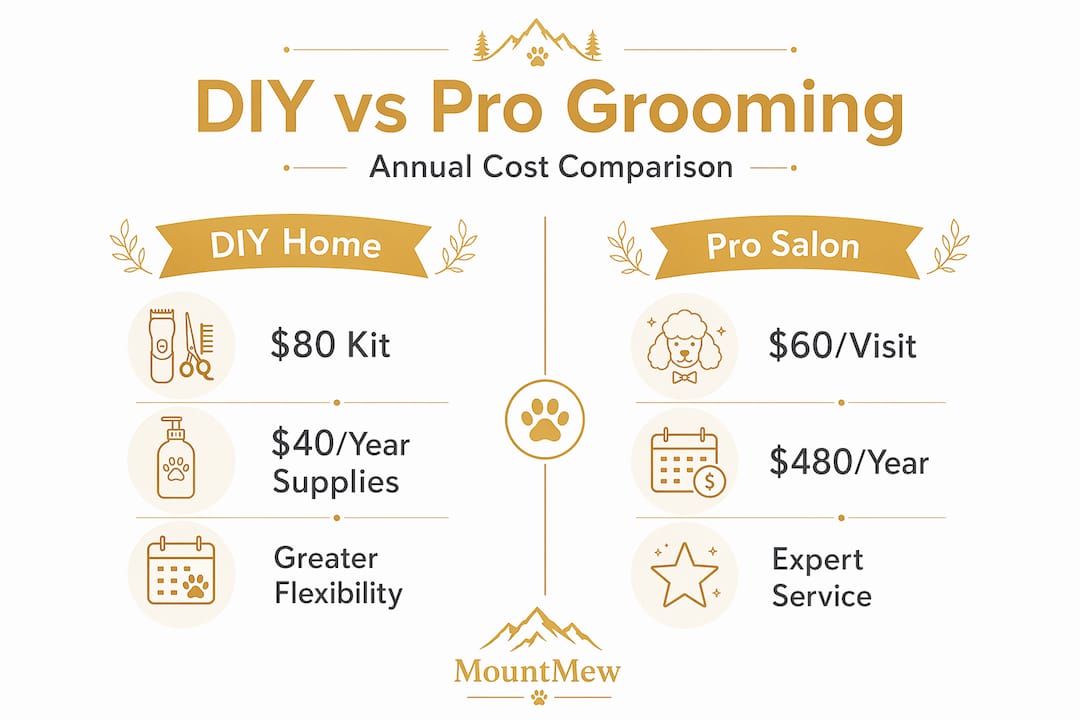
Numbers make the case better than any argument. Professional grooming costs $40 to $100 per session, which adds up to $480 to $1,200 annually for a dog groomed every six weeks. A complete home grooming kit runs $150 to $300 upfront.
| Dog size | Pro grooming (per visit) | Annual pro cost (8x/year) | DIY kit cost | Break-even point |
|---|---|---|---|---|
| Small (under 20 lbs) | $40–$55 | $320–$440 | $150–$200 | 3–4 months |
| Medium (20–50 lbs) | $55–$75 | $440–$600 | $200–$250 | 3–5 months |
| Large (50+ lbs) | $75–$100 | $600–$800 | $250–$300 | 3–5 months |
The smartest cost-saving strategy isn’t going fully DIY. It’s replacing most professional visits with home grooming while keeping one or two pro appointments per year for tasks like full haircuts or dematting. That hybrid approach cuts your annual grooming bill by 60% to 75% while keeping your pet looking professionally maintained.
Ongoing costs after your initial kit purchase are minimal. Shampoo, ear cleaner, and styptic powder run about $30 to $50 per year. Your tools last years with basic care.
My honest take on grooming your own pet
I’ll be direct: the first few times you groom your own pet at home, it will feel awkward. The dog will squirm. You’ll second-guess the nail trim. The coat won’t look as polished as it does after a professional session. That’s completely normal, and it passes faster than you’d expect.
What I’ve learned from watching pet owners go through this process is that the biggest mistake isn’t bad technique. It’s buying too much gear at once and then feeling overwhelmed before they’ve even started. Start with a brush, a comb, nail trimmers, and shampoo. Get comfortable with those four tools before you add clippers.
The other thing I’d push back on is the idea that home grooming is just a money-saving compromise. Done consistently, it’s actually better for your pet in some ways. You notice changes in your pet’s skin, coat, and body that you’d never catch between six-week salon visits. A lump, a rash, a tender spot. That early awareness has real health value.
Matching your tools to your pet’s coat from the start, rather than buying whatever’s cheapest, is the single investment that pays off most. A good brush used consistently beats an expensive clipper used twice a year.
Build the routine. Keep sessions short and positive. Your pet will come to expect it, and eventually, some dogs genuinely enjoy it.
Stock your home grooming kit with Mountmew

Mountmew carries everything you need to build a solid home grooming setup without overspending. Their grooming and bathing collection includes brushes, combs, clippers, shampoos, and drying towels, all in one place. If you’re starting from scratch, the rechargeable pet clipper and a professional grooming comb are a strong foundation. For bath days, the absorbent grooming towel set cuts drying time significantly. Mountmew also donates a portion of every sale toward feeding shelter dogs, so your purchase does double duty. Free shipping and regular discounts make it easy to build your kit gradually without a big upfront commitment.
FAQ
How much can I save by grooming my dog at home?
DIY grooming saves $300 to $900 annually depending on your dog’s size and how often they need grooming. A starter kit pays for itself within two to five months.
What tools do I actually need to start grooming at home?
You need a slicker brush, a stainless-steel comb, nail trimmers, styptic powder, and pet shampoo. These five basics cover bathing, brushing, and nail care for most dogs.
How often should I clean my dog’s ears at home?
Once a month is the standard recommendation for most dogs. Use a vet-approved cleaner, massage the base of the ear, and wipe only the visible area. Never use cotton swabs inside the ear canal.
Are mobile pet grooming services worth it?
Mobile grooming services are a practical affordable pet grooming alternative for anxious dogs or owners without bathtub access. Bath-only mobile options cost less than full salon appointments and pair well with a home grooming routine.
What should I do if my pet hates being groomed?
Start with very short sessions using tools your pet can sniff and investigate before you use them. Reward consistently with high-value treats, and consider a nail grinder over clippers for anxious or sensitive pets since grinders are less startling than the snap of a clipper.
Recommended
- Grooming & Bathing – MountMew
- Rechargeable Pet Electric Clipper – Professional Dog Grooming Trimmer – MountMew
- Pet Bath Shampoo – Professional Dog Grooming Formula – MountMew
- Professional Pet Grooming Comb for Dog Cleaning & Detangling – MountMew